



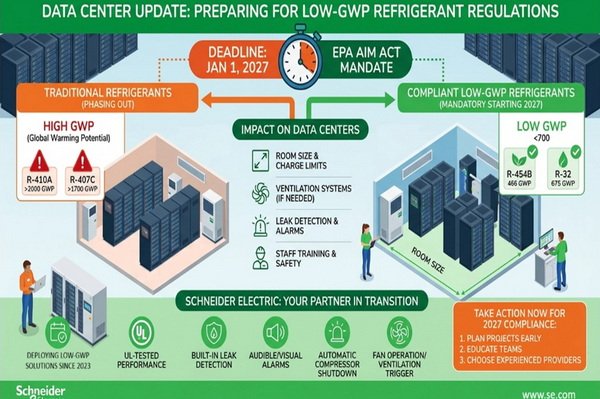
ชไนเดอร์ อิเล็คทริค (Schneider Electric) ผู้นำระดับโลกด้านเทคโนโลยีพลังงาน แนะอุตสาหกรรมดาต้าเซ็นเตอร์ เตรียมรับมือข้อบังคับใช้สารทำความเย็นค่า GWP ต่ำ เพื่อลดภาวะโลกร้อน ผ่านการควบคุมและลดปริมาณการใช้สาร HFCs และมลพิษอื่นลงอย่างเป็นรูปธรรม
กฎข้อบังคับของสำนักงานปกป้องสิ่งแวดล้อมแห่งสหรัฐอเมริกา (U.S. Environmental Protection Agency’s regulation states) หรือ EPA ที่กำลังจะมีผลบังคับใช้นั้นระบุว่า อุปกรณ์ ใหม่สำหรับดาต้าเซ็นเตอร์ จะต้องใช้สารทำความเย็นที่มีค่าศักยภาพในการทำให้เกิดโลกร้อน (Global Warming Potential) หรือ GWP ต่ำกว่า 700 โดยจะเริ่มมีผลตั้งแต่วันที่ 1 มกราคม 2027
ทั้งนี้ค่า GWP คือ ดัชนีวัดความอันตรายของสารที่มีต่อสภาพภูมิอากาศ ตัวเลขยิ่งต่ำยิ่งส่งผลเสียต่อสิ่งแวดล้อมน้อยลง ซึ่งสารทำความเย็นที่ใช้ในเครื่องปรับอากาศในดาต้าเซ็นเตอร์ส่วนใหญ่ในปัจจุบัน เช่น R-410A และ R-407C มีค่า GWP สูงเกินขีดจำกัดค่อนข้างมาก แม้ว่าการติดตั้งเดิมจะยังคงใช้งานและบำรุงรักษาต่อไปได้ แต่อุปกรณ์ใหม่ที่ติดตั้งหลังจากนี้จะต้องเปลี่ยนไปใช้สารทำความเย็นชนิดใหม่ที่มีค่า GWP ต่ำเท่านั้น
ทำไมกฎหมายฉบับนี้ถึงมีความสำคัญ
กฎหมายที่เป็นหัวใจสำคัญของการเปลี่ยนแปลงกฎระเบียบด้านสารทำความเย็นคือ พระราชบัญญัติการผลิตและนวัตกรรมแห่งอเมริกา (American Innovation Manufacturing Act หรือ AIM Act) โดยรายละเอียดขั้นสุดท้ายที่มีผลกระทบต่อดาดต้าเซ็นเตอร์ได้รับการสรุปออกมาเมื่อช่วงปลายปี 2024 โดยเป้าหมายของกฎหมายฉบับนี้คือการลดภาวะโลกร้อน ผ่านการควบคุมและลดปริมาณการใช้สาร HFCs (Hydrofluorocarbons) รวมถึงมลพิษอื่นๆ ลงอย่างเป็นรูปธรรม
สิ่งสำคัญที่ต้องตระหนักคือ ในปัจจุบันอุตสาหกรรมดาต้าเซ็นเตอร์ยังคงพึ่งพาสารทำความเย็นที่มีค่าการปล่อยมลพิษสูงเกินกว่าขีดจำกัดที่ EPA กำหนดซึ่งกำลังจะเริ่มบังคับใช้ในเร็วๆ นี้
การเปลี่ยนสารทำความเย็นครั้งนี้สำคัญอย่างไรกับดาต้าเซ็นเตอร์
ย้อนนึกไปถึงปี 2010 เมื่อตอนที่ EPA สั่งแบนการผลิตอุปกรณ์ที่ใช้สารทำความเย็น R-22 หลังจากนั้นอีก 10 ปีต่อมา การผลิตและการนำเข้า R-22 ในสหรัฐอเมริกาก็สิ้นสุดลงอย่างถาวรและในปัจจุบันผู้ดูแลโครงสร้างพื้นฐานดาต้าเซ็นเตอร์จะสามารถเข้าถึง R-22 ได้เมื่อเป็นสารที่นำกลับมาบำบัดใหม่จากระบบรุ่นเก่าเท่านั้น
ในอดีตอุตสาหกรรมสามารถผ่านช่วงการเปลี่ยนผ่านนี้ไปได้ไม่ยากนัก เพราะระบบทำความเย็นเดิมสามารถปรับเปลี่ยนให้รองรับสารทำความเย็นตัวใหม่ R-407C ที่สอดคล้องตามข้อกำหนดได้ง่าย แต่การเปลี่ยนผ่านสารทำความเย็นในครั้งนี้มีความซับซ้อนกว่าเดิม
ผลกระทบดาต้าเซ็นเตอร์จากกฎข้อบังคับใช้ค่า GWP ต่ำ
ข้อกำหนดด้านขนาดห้อง (ขีดจำกัดปริมาณสารทำความเย็นต่อปริมาตร) ในอดีตการพิจารณาจะมุ่งเน้นไปที่การทำให้ชุดระบายความร้อนมีขนาดพอดีกับห้องและมีทิศทางลมที่ดีเท่านั้น แต่ในปัจจุบันต้องคำนึงถึง “ขนาดโดยรวมของห้อง” ด้วยเช่นกัน มาตรฐานใหม่ที่ได้รับการปรับปรุงได้กำหนด “ขนาดห้องขั้นต่ำ” สำหรับเครื่องปรับอากาศ โดยคำนวณจากปริมาณสารทำความเย็นที่บรรจุอยู่ภายในเครื่อง ทั้งนี้เพื่อป้องกันไม่ให้เกิดส่วนผสมของอากาศที่อันตราย หากเกิดการรั่วไหลของสารทำความเย็น จึงเป็นเหตุผลว่า ทำไมขนาดของห้องจึงกลายเป็นปัจจัยสำคัญที่ต้องนำมาพิจารณาตั้งแต่ขั้นตอนการวางแผน
ระบบระบายอากาศในห้อง แนวทางปฏิบัติที่ดีที่สุดคือการสร้างพื้นที่สำหรับอุปกรณ์ไอทีให้มิดชิดและมีเกราะป้องกันไอความชื้นที่ดี ปัจจุบันหากห้องนั้นมีขนาดห้องไม่ตรงตามเกณฑ์ขั้นต่ำที่กำหนดของการบรรจุสารทำความเย็น จำเป็นต้องติดตั้งระบบระบายอากาศเพิ่มเติม ซึ่งหน่วยทำความเย็นของชไนเดอร์ อิเล็คทริคได้รวมระบบตรวจจับการรั่วไหลตั้งแต่ระยะเริ่มต้นและตรรกะการตอบสนองที่สามารถใช้เพื่อสั่งการระบบระบายอากาศของห้องได้ทันที ช่วยลดความซับซ้อนและค่าใช้จ่ายในการติดตั้ง
ทำไม ชไนเดอร์ อิเล็คทริค จึงก้าวหน้าไปอีกขั้น
ชไนเดอร์ อิเล็คทริคเล็งเห็นแนวโน้วของข้อกำหนดทางกฎหมายที่กำลังจะเกิดขึ้นเหล่านี้ จึงได้ดำเนินการเตรียมความพร้อมล่วงหน้า โดยปรับโฉมการออกแบบและเริ่มใช้งานระบบทำความเย็นที่ใช้สารทำความเย็นค่า GWP ต่ำ ในดาต้าเซ็นเตอร์ตั้งแต่ปี 2023 ในอเมริกาเหนือ และได้ขยายการใช้งานยูนิตเพิ่มเติมในยุโรปช่วงปี 2024 เป็นต้นมา
แนวทางการทำงานเชิงรุกของชไนเดอร์ อิเล็คทริคในการตรวจสอบประสิทธิภาพของระบบใหม่ในโลกแห่งความเป็นจริง ช่วยให้สามารถนำเสนอโซลูชันค่า GWP ต่ำที่แข็งแกร่งให้กับลูกค้าได้อย่างมั่นใจ แม้ระบบเหล่านี้จะเป็นเรื่องใหม่สำหรับหลายคน แต่ สำหรับชไนเดอร์ อิเล็คทริคเทคโนโลยีนี้ไม่ใช่เรื่องใหม่
คุณสมบัติโดดเด่นในกลุ่มผลิตภัณฑ์ของชไนเดอร์ อิเล็คทริคที่ใช้สารทำความเย็นค่า GWP ต่ำ ได้แก่
– ระบบตรวจจับสารทำความเย็นในตัว พร้อมสัญญาณแจ้งเตือนด้วยเสียงและภาพ
– ระบบปิดการทำงานของคอมเพรสเซอร์โดยอัตโนมัติเมื่อตรวจพบการรั่วไหล
– การทำงานของพัดลมเพื่อเจือจางความเข้มข้นของสารทำความเย็น พร้อมตัวเลือกในการสั่งเปิดระบบระบายอากาศห้อง
– ประสิทธิภาพการตรวจจับสารทำความเย็นที่ผ่านการทดสอบมาตรฐาน ULที่มีความเชื่อถือได้สูง
ชไนเดอร์ อิเล็คทริคไม่ได้เพิ่งเริ่มต้นรับมือกับผลกระทบของกฎข้อบังคับค่า GWP ต่ำ ในอุปกรณ์ทำความเย็นสำหรับดาต้าเซ็นเตอร์ แม้ว่าจะยังพอมีเวลาในการเตรียมตัว แต่ขอแนะนำอย่างยิ่งให้ผู้ที่ดูแลอุปกรณ์ทำความเย็น เริ่มพิจารณาวางแผนปฏิบัติการตั้งแต่ตอนนี้
อะไรคือผลกระทบในเชิงปฏิบัติ
การเตรียมองค์กรให้พร้อมสำหรับการเปลี่ยนผ่านที่ราบรื่นสามารถเริ่มทำได้ทันที โดยการปรับเปลี่ยนลำดับขั้นตอนการทำงานในปัจจุบันเพียงเล็กน้อย และพิจารณาขั้นตอนเหล่านี้เพื่อเตรียมธุรกิจให้พร้อมรับมือกับข้อกําหนดการใช้สารทำความเย็น GWP ต่ำ ในวันที่ 1 มกราคม 2027
– เลือกผู้ให้บริการโซลูชันดาต้าเซ็นเตอร์ที่มีประสบการณ์จริงที่พิสูจน์แล้วในการติดตั้งและใช้งานเทคโนโลยีที่ใช้สารทำความเย็นค่า GWP ต่ำ ได้สำเร็จ
– ตรวจสอบแผนการดำเนินโครงการต่างๆ ในช่วงครึ่งหลังของปี 2026 เป็นต้นไป จะต้องใช้สารทำความเย็นที่ถูกต้องตามข้อกำหนดเพื่อหลีกเลี่ยงปัญหาการติดขัดหรือการหยุดชะงักในนาทีสุดท้าย
– ให้ความรู้แก่ทีมงาน อบรมทีมงานเกี่ยวกับสารทำความเย็นชนิดใหม่และวิธีการตอบสนองหากเกิดเหตุรั่วไหล
ชไนเดอร์ อิเล็คทริค จะเปิดตัวผลิตภัณฑ์ที่รองรับมาตรฐานค่า GWP ต่ำตัวแรกในเดือนเมษายน 2026 และจะทยอยเปิดตัวรุ่นอื่นๆ ตามมา โดยร่วมสำรวจผลิตภัณฑ์ที่รองรับ Low-GWP ตัวแรกของเรา: เครื่องทำความเย็นรุ่น InRow RD101S ขนาด 11kW ที่ใช้สาร R-32 ได้ที่ ACRD101S – InRow RD101S 300mm DX R32, 100-120V, 200-240V / 1ph / 50/60Hz, CE/UL | Schneider Electric USA
Low‑GWP Refrigerants Are Coming Fast — Here’s What Data Center Teams Need to Know
An important regulation in cooling equipment is coming into effect soon, and it impacts your data center.
A fast-approaching U.S. Environmental Protection Agency’s (EPA) regulation states that new data center equipment must use refrigerants with low Global Warming Potential (low-GWP) rating below 700, starting January 1, 2027. GWP is a metric used to indicate how harmful a substance is to the climate, with a lower number meaning less harm to the environment. The refrigerants used by most data center air conditioners today, R-410A and R-407C, are well above this limit. While existing installations can continue to operate and be maintained, new air conditioners must use different, low-GWP refrigerants.
Why This Legislation Matters
The legislation at the center of these regulatory changes for refrigerants is the American Innovation Manufacturing (AIM) Act. The final details that affect data centers were finalized in late 2024 and the law seeks to reduce global warming by reducing HFCs and other pollutants.
While these ambitions are admirable and necessary, it’s important to remember that the data center industry currently relies on refrigerants that will soon be above the limits allowed by the EPA.
Let’s keep in mind that we’ve been here before.
What This Refrigerant Transition Means for Data Centers
Think back to 2010 when the EPA banned manufacturing of equipment using the R-22 refrigerant. Ten years later production and import of R-22 ended in the U.S. And today, facilities managers can only access R-22 if it’s been reclaimed from legacy systems.
The industry was able to easily navigate this transition because refrigeration systems could be easily adapted to use the new regulation-compliant refrigerant (R-407C). Unfortunately, the refrigerant transition is more complicated this time.
The operational impacts of low-GWP regulations for data centers include:
Room-size requirements (charge/volume limits): In the past, the focus was on ensuring the cooling unit physically fit into the room and had good airflow paths. Now, you also must be mindful of the overall room size. Updated standards define the minimize room size for an air conditioner based on the amount of refrigerant it contains. This is intended to avoid reaching an undesirable air mixture should a refrigerant leak occur. This is why room size is now an important factor to include early in planning stages.
Room Ventilation System – Best practices have always been to tightly construct spaces containing IT equipment with good vapor barriers. Now, if a room does not meet the minimum room size requirements, adding a ventilation system may be required. If needed, Schneider Electric’s cooling units include early leak detection and response logic that can be used to trigger a room ventilation system, helping to minimize installation complexity and expense.
Schneider Electric’s designs address these issues head-on.
Why Schneider Electric Is Ahead
Schneider Electric saw the legislation forming and took action to prepare. We’ve redesigned and been operating cooling units with low-GWP refrigerants in live data centers since 2023 in North America and additional units in Europe since 2024.
Our proactive approach to validating new system performance in the real-world allows us to confidently offer robust low-GWP solutions to customers. While these systems will be new to many, Schneider Electric is no stranger to this technology.
Features of Schneider’s portfolio leveraging low-GWP refrigerants include:
* Built-in refrigerant detection with audible/visual alarms
* Automatic compressor shutdown on detection
* Fan operation to dilute refrigerant; optional room ventilation triggering
* UL-tested refrigerant detection performance (reliability)
Bottom line: Schneider Electric isn’t new to managing the impact of low-GWP regulations on data center cooling equipment. While there is still some time to prepare, we urge those overseeing data center cooling equipment to consider an action plan now.
What This Means for You
Positioning your organization for a smooth transition can start now with a few adjustments and shifts in current workflows. Consider these steps to prepare your business for the Jan. 1, 2027, low-GWP refrigerant deadline:
* Always work with a data center solution provider that not only has the technical solutions, but the experience of successfully deploying technology using low-GWP refrigerants in data centers.
* Confirm that any projects planned for the latter half of 2026 and beyond are using compliant refrigerants to avoid any last-minute disruptions.
* Educate your teams on the new refrigerants and how to respond in the event of a leak.
What’s Coming Next
Schneider Electric will launch our first low‑GWP‑compliant product in April 2026, with additional models rolling out in phased portfolio transitions.
Explore our first low-GWP-compliant product, the 11kW InRow cooling unit using R-32 available here: