



ในสมการการขับเคลื่อนเศรษฐกิจยุคใหม่ ความยั่งยืนของทุกภาคส่วน ไม่ใช่แค่คำสวยเก๋หรือทางเลือก แต่คือทางร่วมของความสมดุลทั้งเศรษฐกิจ สังคม ภาคประชาชน และธรรมาภิบาล ความมั่นคงทางเศรษฐกิจต้องไม่ทิ้งใครไว้ข้างหลัง กระแสความท้าทายด้านสิ่งแวดล้อมต้องได้รับการบริหารจัดการอย่างเหมาะสม ภาคธุรกิจอุตสาหกรรมต้องอยู่ร่วมกับภาคประชาชนด้วยความเกื้อหนุน และการสร้าง “คุณค่าร่วม” (Creating Shared Value: CSV) เพื่อให้ทุกภาคส่วนเติบโตไปด้วยกันได้อย่างมั่นคง
กรอบแนวคิด ESG: ต้นแบบความยั่งยืนของโรงไฟฟ้าฐานสู่การอยู่ร่วมกันของทุกภาคส่วนอย่างยั่งยืน
นโยบายและพันธกิจหลักสำคัญของการดำเนินงานของโรงไฟฟ้าบีแอลซีพี คือ การสร้างความมั่นคงทางพลังงานควบคู่กับการลดผลกระทบต่อสิ่งแวดล้อมร่วมกับมิติด้านสังคม ชุมชน และประชาชนรอบโรงไฟฟ้าด้วย “การยอมรับและไว้วางใจ” (Social License to Operate) เป็นหัวใจสำคัญ โดยส่วนของสิ่งแวดล้อมมีการดำเนินการตั้งแต่กระบวนการผลิตที่ใช้เทคโนโลยีทันสมัย เพื่อลดมลพิษให้ได้มากที่สุดและมีการดำเนินโครงการดูแลสิ่งแวดล้อมเชิงรุก เช่น การปลูกป่าชุมชน และการปล่อยพันธุ์สัตว์น้ำคืนความอุดมสมบูรณ์สู่ท้องทะเล ส่วนภาคสังคมมีการปฏิสัมพันธ์กับชุมชนและประชาชนในพื้นที่ด้วยความยืดหยุ่น เปิดรับความคิดเห็น ทำงานร่วมกันเพื่อให้เกิดประโยชน์ ไม่ว่าจะเป็นการจัดทำโครงการช่วยเหลือและส่งเสริมที่สอดรับกับความต้องการที่แท้จริงของชุมชนท้องถิ่น เน้นการสร้างทักษะและองค์ความรู้เพื่อให้สามารถพึ่งพาตนเองได้ในระยะยาว
‘ไตรภาคี’ สะพานเชื่อมความโปร่งใส คลายความกังวลชุมชน
สิ่งที่เป็นอุปสรรคสำคัญของภาคอุตสาหกรรมในอดีตคือ “ช่องว่างแห่งความเข้าใจ” กับชุมชนรอบพื้นที่ การดำเนินงานของโรงไฟฟ้าบีแอลซีพี จึงตระหนักถึงความร่วมมือ สื่อสาร และสร้างความเข้าใจ ด้วยการจัดให้มีการประชุมคณะไตรภาคีเกิดขึ้นในทุกไตรมาส โดยมีผู้แทนจากทุกภาคส่วนทั้งหน่วยงานราชการ คณะกรรมการไตรภาคี ประธานชุมชน ประธานกลุ่มประมง และผู้บริหารบริษัท มาร่วมโต๊ะเดียวกัน เวทีนี้ทำหน้าที่เป็น “สะพานเชื่อมความรู้ความเข้าใจ” และรายงานผลการตรวจวัดคุณภาพสิ่งแวดล้อมอย่างตรงไปตรงมา พร้อมทั้งเปิดโอกาสให้ชุมชนมีส่วนร่วมในระดับสำคัญ สามารถแสดงความคิดเห็น นำเสนอความต้องการ และร่วมออกแบบทิศทางโครงการ CSR ต่างๆ ให้ตรงจุดและยืดหยุ่นตามบริบทของพื้นที่ จนเกิดเป็นความยอมรับและความไว้วางใจซึ่งกันและกันในที่สุด
‘เลี้ยงหอยแมลงภู่แบบแขวน’ จากโครงการต้นแบบ สู่อาชีพเสริม อู่ข้าวอู่น้ำใหม่ของกลุ่มประมงระยอง
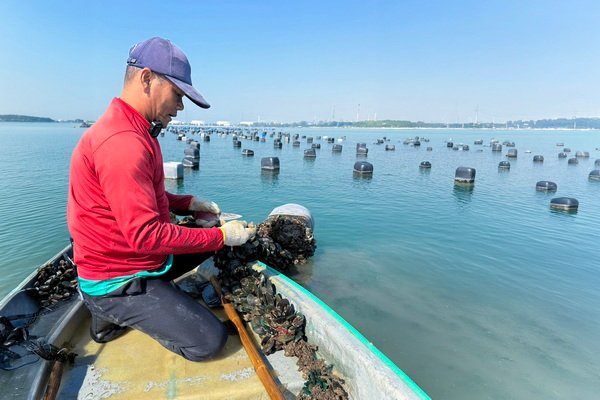
หนึ่งในตัวอย่างความสำเร็จเชิงประจักษ์ที่เกิดจากการรับฟังและต่อยอดภูมิปัญญาท้องถิ่น คือ “โครงการฟาร์มเพาะเลี้ยงหอยแมลงภู่แบบแขวน” ย้อนกลับไปปี 2548 ชาวบ้านบริเวณตากวน-อ่าวประดู่ส่วนใหญ่ประกอบอาชีพประมงทำอวนปูและอวนปลาเป็นหลัก เมื่อโรงไฟฟ้าบีแอลซีพี เข้ามาดำเนินงานในพื้นที่ ทีมเจ้าหน้าที่ของโรงไฟฟ้าฯ ไม่ได้นำโครงการสำเร็จรูปจากภายนอกมาครอบเพื่อเปลี่ยนวิถีชีวิตความเป็นอยู่เดิมของชุมชนและคนในพื้นที่ แต่เลือกที่จะใช้วิธีการลงพื้นที่เพื่อพูดคุยและร่วมศึกษาความเป็นไปได้ในการจัดทำโครงการที่เหมาะสมกับชุมชน จมมีการเห็นพ้องกันว่า การเลี้ยงหอยแมลงภู่ คือ แนวทางที่เหมาะสมที่สุดสำหรับสภาพน้ำและวิถีชีวิตชองชุมชนและประชาชนบริเวณพื้นที่ตากวน-อ่าวประดู่
พี่แดง-นายแดง บุญจันทร์ ตำแหน่งคณะกรรมการกลุ่มประมงเรือเล็กตากวน-อ่าวประดู่ ยังจำได้ดีถึงช่วงแรกของการเริ่มจัดทำโครงการ “ทางโรงไฟฟ้าฯ ได้ร่วมกับกลุ่มประมงตากวน-อ่าวประดู่ เปิดรับสมาชิกกลุ่มผู้สนใจทดลองเลี้ยงหอยแมลงภู่ ซึ่งตอนนั้นมีทั้งคนที่เห็นด้วยกับคนที่ยังไม่เข้าร่วมแต่เฝ้ามอง จากนั้นก็มีการเชิญวิทยากรมาให้ความรู้เบื้องต้น แนวทางความเป็นไปได้ การดูแลหอยแมลงภู่ ปัจจัยแวดล้อมต่างๆ รวมถึงความคุ้มทุนคุ้มค่า พร้อมทั้งพาลงพื้นที่จังหวัดชลบุรีเพื่อศึกษาดูงานตั้งแต่เริ่มทำแพเลี้ยงหอย ถักแพ ผูกเชื้อ และหาวิธีเลี้ยงที่สอดคล้องเหมาะสม โดยมาสรุปจบที่การเลี้ยงหอยแมลงภู่แบบแพลอย โดยเริ่มต้นเลี้ยงกันคนละ 1 แพ ซึ่งทางโรงไฟฟ้าบีแอลซีพี ได้ช่วยเหลือเรื่องทุนตั้งต้น จัดหาอุปกรณ์ และร่วมบริหารจัดการฟาร์มไปด้วยกัน”
ด้วยการดูแลอย่างใกล้ชิดและการวางระบบที่ดี ใช้เวลาเลี้ยงราว 8-9 เดือน ผลปรากฏว่าหอยแมลงภู่เติบโตได้ดี ตัวมีขนาดใหญ่ สมบูรณ์ ให้ผลผลิตในปีแรกสูงถึง 20–30 ตัน ความสำเร็จและผลผลิตที่ได้มากจนเป็นที่น่าพอใจสร้างความมั่นใจกับสมาชิกในกลุ่มว่า นี่คือความเป็นไปได้ในการสร้างแหล่งรายได้ใหม่ของชุ่มชนประมงตากวน-อ่าวประดู่ ดังนั้นทางกลุ่มจึงร่วมกัน พร้อมด้วยความช่วยเหลือจากโรงไฟฟ้าบีแอลซีพี จับมือกันยื่นเรื่องขออนุญาติในการเลี้ยงหอยแมลงภู่ในระบบฟาร์ม ซึ่งก็ได้รับอนุญาตให้เลี้ยงได้รายละไม่เกิน 3 ไร่ เนื่องจากอยู่ในเขตอุตสาหกรรม

ปัจจุบัน โครงการนี้ได้รับการยกระดับและขยายผลอย่างกว้างขวาง โดยมีสมาชิกทำแพเลี้ยงหอยรวมกันแล้วประมาณ 76 แปลง ทักษะของกลุ่มประมงได้รับการพัฒนาจนเกิดเป็นองค์ความรู้เฉพาะถิ่นที่แม่นยำไม่ว่าจะเป็น
– เทคนิคการจัดวาง: วางเชือกเป็นตารางสี่เหลี่ยมจัตุรัส ระยะห่าง 2 เมตร x 2 เมตร เพื่อให้หอยได้รับสารอาหารอย่างทั่วถึง
– ระยะเวลาเก็บเกี่ยว: ใช้เวลาเลี้ยงตั้งแต่ 8-9 เดือนขึ้นไป โดยช่วงที่หอยมีคุณภาพเนื้อดีและรสชาติอร่อยที่สุดจะอยู่ในช่วงเดือนมกราคม–กุมภาพันธ์
– การควบคุมปัจจัยทางธรรมชาติ: หอยแมลงภู่จะเติบโตได้ดีในน้ำที่มีความสะอาด อุณหภูมิเหมาะสม มีแพลงตอนอุดมสมบูรณ์ และต้องมีปริมาณน้ำจืดจากคลองไหลลงมาผสมในสัดส่วนที่พอดี โดยค่าความเค็มของน้ำต้องอยู่ในระดับ 18–20 psu (หากต่ำกว่า 14 psu หอยจะล้มตาย แต่ถ้าไม่มีน้ำจืดมาเจือปนเลย หอยจะโตช้าและเนื้อไม่อร่อย)
ไม่เพียงเท่านั้น กลุ่มวิสาหกิจชุมชนประมงเรือเล็กตากวน-อ่าวประดู่ ยังได้นำปรัชญาเศรษฐกิจพอเพียงมาผสมผสาน ด้วยการยกระดับสู่อุตสาหกรรมระดับครัวเรือน พัฒนาผลิตภัณฑ์ “หอยแมลงภู่แปรรูปอบแห้ง” เพื่อเพิ่มมูลค่า ถนอมอาหารให้เก็บไว้ได้นานขึ้น และสร้างช่องทางรายได้เสริมที่มั่นคงตลอดทั้งปี
ความสำเร็จ ดอกผลที่งอกงามแห่งความยั่งยืนจากกลุ่มประมงเล็กๆ ในวันนั้น
วันนี้พื้นที่บริเวณตากวน-อ่าวประดู่ ปากคลองตากวน และหาดแสงเงิน ได้กลายเป็นแหล่งเพาะเลี้ยงหอยแมลงภู่แบบแขวนรายใหญ่ที่สำคัญของจังหวัดระยอง โดยมีสถิติที่น่าสนใจ อาทิ จำนวนผู้ประกอบอาชีพเพาะเลี้ยงรวม 91 ราย (ตากวน-อ่าวประดู่ 73 ราย / ปากคลองตากวน 11 ราย / หาดแสงเงิน 7 ราย) ผลผลิตเฉลี่ยต่อรายประมาณ 5 ตัน / รอบการผลิต ปริมาณผลผลิตรวมของกลุ่มสูงถึง 350 ตัน / ปี ภายใต้ขอบเขตการดูแลรวมของโรงไฟฟ้าบีแอลซีพี ครอบคลุม 38 ชุมชน 12 กลุ่มประมง และส่งเสริมเศรษฐกิจวิสาหกิจชุมชนรวม 52 กลุ่ม
เรื่องราวของโรงไฟฟ้าบีแอลซีพี กลุ่มประมงเรือเล็กตากวน-อ่าวประดู่ และกลุ่มประมงในพื้นที่รอบโรงไฟฟ้า จึงเป็นภาพสะท้อนที่ชัดเจนว่า การดำเนินนโยบาย CSR และ ESG ที่แท้จริง ไม่ใช่เพียงการมอบเงินบริจาคแล้วจบไป หากแต่คือการลงพื้นที่รับฟัง ร่วมคิด ร่วมทำ บนพื้นฐานของความโปร่งใส จนสามารถเปลี่ยน “ความห่วงกังวล” ให้กลายมาเป็น “ความร่วมมือ” ที่ช่วยพลิกฟื้นทั้งเศรษฐกิจฐานรากและปกป้องทรัพยากรทางทะเลให้อยู่คู่เมืองระยองได้อย่างยั่งยืน
โรงไฟฟ้า บีแอลซีพี “มุ่งพัฒนาพลังงานที่มั่นคง เพื่อชุมชนและสิ่งแวดล้อมอย่างยั่งยืน” ผู้สนใจค้นหาข้อมูลเพิ่มเติมได้ที่ https://www.blcp.co.th/web/index หรือ Facebook : โรงไฟฟ้าบีแอลซีพี – BLCP Power Limited

The ” hanging mussel farm ” model: the fruit of cooperation and coexistence. Rayong fishing community – BLCP power plant: On the same sustainability equation.
In the equation for driving the modern economy, sustainability across all sectors is not just a fancy term or an option, but a shared path of balance encompassing the economy, society, the people, and good governance. Economic security must leave no one behind. Environmental challenges must be managed appropriately. The business and industrial sectors must coexist in a mutually beneficial way, and “Creating Shared Value” ( CSV) must be implemented to ensure sustainable growth for all sectors.
ESG Framework : A Model for Sustainable Growth in Base Load Power Plants for the Coexistence of All Sectors.
The core policy and mission of BLCP Power Plant is to ensure energy security while minimizing environmental impact, along with considering the social, community, and public aspects surrounding the power plant through “acceptance and trust” (Social License to Operate). This is a key aspect. The environmental sector involves actions starting from production processes using modern technology to minimize pollution as much as possible, and implementing proactive environmental care projects such as community reforestation and releasing aquatic animals to restore marine life. The social sector involves flexible interaction with local communities and residents, accepting diverse opinions and working collaboratively for mutual benefit. This includes developing assistance and support projects that align with the genuine needs of local communities, focusing on building skills and knowledge to enable long-term self-reliance.
‘Tripartite ‘ approach : A bridge for transparency and alleviating community concerns.
A major obstacle for the industrial sector in the past was the “gap in understanding” with the surrounding communities. BLCP Power Plant recognizes the importance of collaboration, communication, and building understanding through quarterly tripartite meetings. These meetings bring together representatives from all sectors – government agencies, the tripartite committee, community leaders, fishing group leaders, and company executives – to serve as a bridge for knowledge and understanding. They provide transparent reporting of environmental quality monitoring results and offer significant opportunities for community involvement. Community members can express their opinions, present their needs, and collaboratively design CSR projects that are targeted and flexible according to the local context, ultimately fostering acceptance and trust.
‘Hanging mussel farming’ : From a pilot project to a new supplementary occupation and source of income for Rayong’s fishing communities.
One tangible example of success resulting from listening to and building upon local wisdom is the ” Hanging Mussel Farming Project. ” Back in 2005, most villagers in the Takuan-Ao Pradu area primarily engaged in fishing, using crab and fish nets. When the BLCP power plant began operations in the area, their team didn’t simply impose a ready-made project from outside that would drastically alter the community’s way of life. Instead, they chose to conduct on-site discussions and collaboratively study the feasibility of a project suitable for the community. There was a consensus that mussel farming was the most appropriate approach for the water conditions and the lifestyle of the community in the Takuan-Ao Pradu area.
Pee Daeng – Mr. Daeng Boonchan, a committee member of the Takuan-Ao Pradu Small Fishing Boat Group, vividly remembers the initial stages of the project: “The power plant, in collaboration with the Takuan-Ao Pradu fishing group, opened registration for those interested in trying mussel farming. At that time, there were those who agreed and those who didn’t yet participate but were watching. Then, speakers were invited to provide basic knowledge, feasibility studies, mussel care, environmental factors, and cost-effectiveness. They also took participants to Chonburi province to study the entire process, from constructing the mussel farming rafts, to weaving the rafts, tying the inoculum, and finding suitable farming methods. The project culminated in floating mussel farming, with each participant starting with one raft. BLCP Power Plant assisted with initial funding, provided equipment, and co-managed the farm.”
With close monitoring and a well-designed system, the mussels are raised for approximately 8-9 months. The results show that the mussels grow well, becoming large and healthy, yielding up to 20-30 tons in the first year. This success and high yield have given the group members confidence in the possibility of creating a new source of income for the Takuan-Ao Pradu fishing community. Therefore, the group, with assistance from BLCP Power Plant, jointly applied for a permit to farm mussels in a system. They were granted permission to farm no more than 3 rai per person, as the area is located within an industrial zone.
Currently, this project has been upgraded and expanded extensively, with approximately 76 oyster farming plots now in operation. The skills of the fishing group have been developed to the point of creating accurate, locally specific knowledge, including:
Arrangement technique: Lay the ropes in a square grid, 2 meters x 2 meters apart, to ensure the oysters receive nutrients evenly.
Harvesting period: The oysters are raised for 8-9 months or more, with the best quality and most delicious taste occurring during January – February.
Controlling natural factors: Mussels thrive in clean water with suitable temperature, abundant plankton, and an appropriate amount of freshwater flowing in from canals. The water salinity must be between 18–20 psu (if it falls below 14 psu , the mussels will die, but if there is no freshwater infusion, the mussels will grow slowly and the meat will be less palatable).
Furthermore, the Takuan-Ao Pradu Small-Scale Fishing Community Enterprise Group has integrated the philosophy of sufficiency economy by upgrading to a household-level industry. They have developed ” dried processed mussels” to increase their value, preserve them for longer shelf life, and create a stable supplementary income stream throughout the year.
Success; the flourishing fruits of sustainability from that small fishing community back then.
Today, the Takuan-Ao Pradu area, the mouth of Takuan Canal, and Saeng Ngern Beach have become major hubs for hanging mussel farming in Rayong Province. Notable statistics include a total of 91 mussel farmers (73 in Takuan-Ao Pradu, 11 at the mouth of Takuan Canal, and 7 at Saeng Ngern Beach), an average yield of approximately 5 tons per production cycle, and a total group production of up to 350 tons per year. This initiative falls under the comprehensive management of BLCP Power Plant, encompassing 38 communities, 12 fishing groups, and supporting 52 community enterprises.
The story of the BLCP power plant, the Takuan-Ao Pradu small-scale fishing community, and other fishing groups in the areas surrounding the power plant clearly reflects that true CSR and ESG policies are not simply about making donations and being done with it. Instead, they involve going to the field, listening, collaborating, and acting together based on transparency. This transforms ” concerns “into” cooperation, ” revitalizing the grassroots economy and protecting marine resources for the sustainable future of Rayong.
BLCP Power Plant is committed to developing stable energy for sustainable communities and the environment. For more information, please visithttps://www.blcp.co.th/web/index or Facebook: BLCP Power Limited .